
Primary Keyword Explained: A Simple 5-Step Method to Choose the Right One
By Abhay Pandey (Digital Marketing Excutive), Digital Marketer at GrowthAbhi | Last updated: October 2026
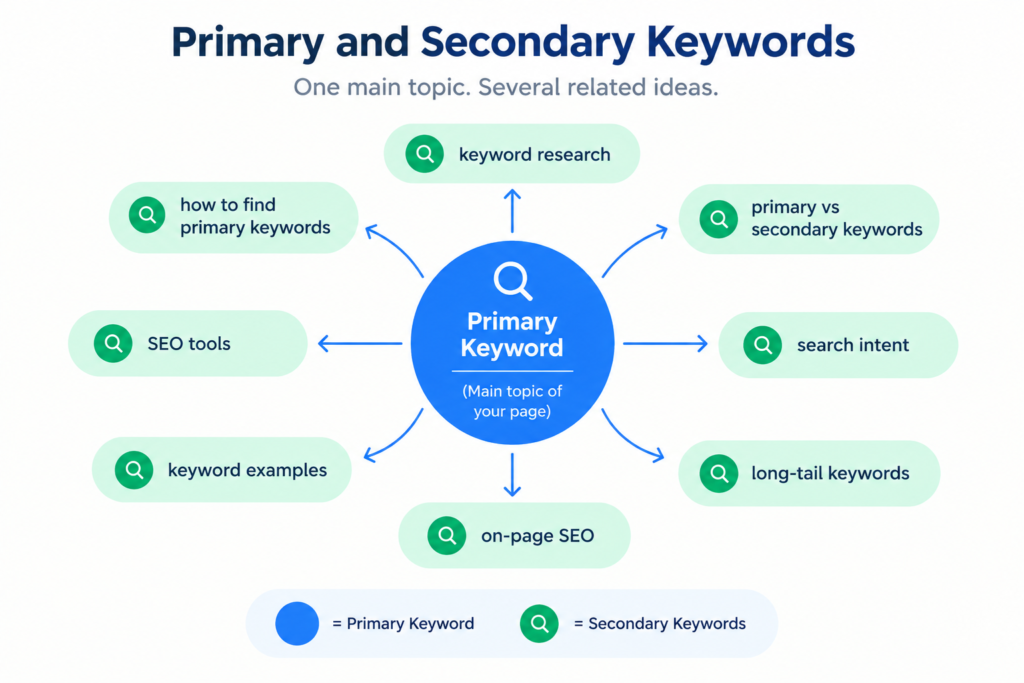
Picture a shop in a busy Prayagraj market. A board saying “Everything Available” tells nobody why they should step in. A board saying “Pure Ghee Sweets” does the job in three words.
Your web page needs a board like that. In SEO, the board is your primary keyword. Below you will find what it does and a five-step method, with a scoring sheet, to choose it without guesswork.
Quick Answer
Your primary keyword is the one search phrase your page is built to answer. Choose it by collecting phrase ideas from real questions, reading the current search results, and scoring each option on relevance, intent, demand, competition and your own angle.
What a Primary Keyword Does for Your Page
It works in three ways. It tells search engines what the page is about. It reassures the visitor that they landed in the right place. And it keeps you disciplined while writing, because every paragraph must support one main idea.
That is why one page should carry one primary keyword. Two unrelated targets on a single page usually produce a blurry page that satisfies neither.
Primary vs Secondary Keywords at a Glance
Here is the difference, using a page about home tuition as the example.
| Role | Primary keyword | Secondary keywords |
|---|---|---|
| Job | Names the page's core topic | Cover related angles and questions |
| Count | One | A handful, used where they fit |
| Usually found in | Title, H1, opening lines | Subheadings, body, FAQs |
| Example | home tuition in Prayagraj | class 10 maths tutor, tuition fees, online vs home tuition |
The 5-Step Method to Choose a Primary Keyword
Step 1: Start with questions, not tools
Write down ten questions your reader would ask. Good raw material hides in WhatsApp messages, Instagram comments, customer calls and classroom doubts. Real wording beats imagined wording.
Step 2: Collect phrase ideas
Type each topic into Google and note the autocomplete suggestions, the “People also ask” box and the related searches at the bottom. Then check Google Keyword Planner for rough demand and Google Trends to see whether interest is growing.
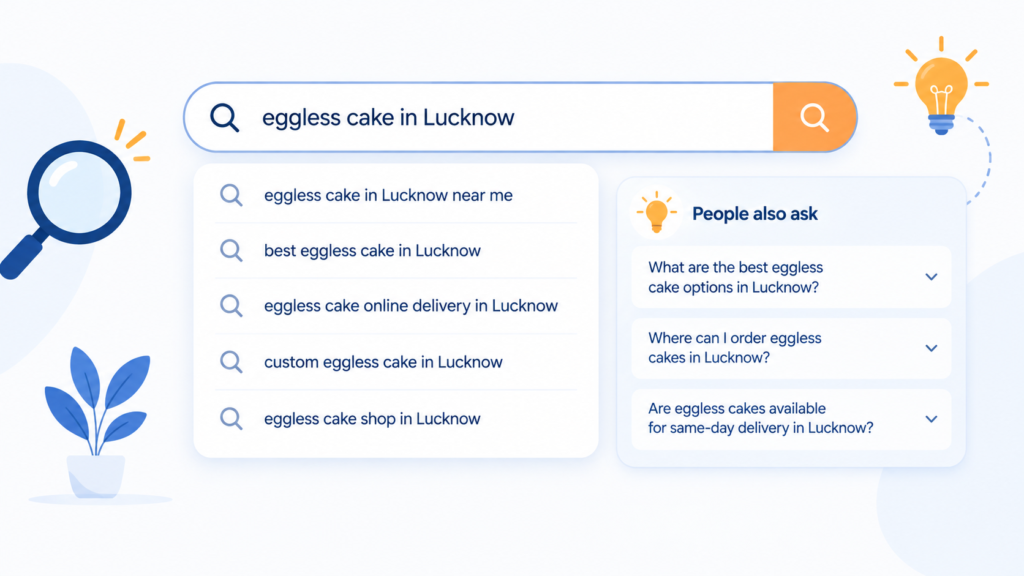
Step 3: Read the results like a customer
Open the top five pages for each phrase. Are they guides, lists, product pages or local business listings? The pattern shows what Google believes people want. If every result is a how-to guide, a sales page will struggle to appear.
Step 4: Mine your own data
If your site is already live, open the Performance report in Google Search Console. Phrases that earn impressions but few clicks often make excellent targets for a stronger, more focused page.
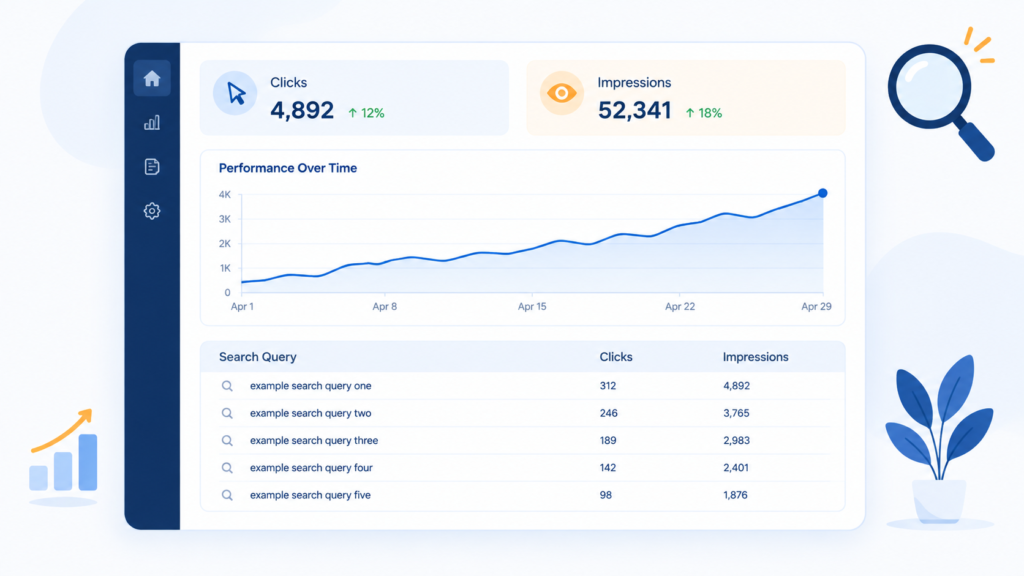
Step 5: Score and decide
Rate each candidate from 1 to 5 on the five questions below. The highest total wins.
| Question | What to ask yourself |
|---|---|
| Relevance | Does this phrase describe my page exactly? |
| Intent match | Does my content type match what the top results offer? |
| Demand | Do enough of the right people search for it? |
| Competition fit | Can a site of my size realistically compete? |
| Your angle | Can I add something original, such as my own examples? |
A Worked Example: Eggless Cakes in Lucknow
Imagine a home baker in Lucknow who sells eggless cakes. Here is how three candidate phrases might score. These numbers are an illustration, not measured data.
| Candidate phrase | Relevance | Intent | Demand | Competition fit | Angle | Total |
|---|---|---|---|---|---|---|
| cake | 2 | 1 | 5 | 1 | 1 | 10 |
| eggless cake in Lucknow | 5 | 5 | 4 | 4 | 4 | 22 |
| custom birthday cake home delivery Lucknow | 5 | 5 | 3 | 4 | 5 | 22 |
Illustrative scores for explanation, not measured data.
The broad word “cake” loses despite high demand. The two local phrases tie, so the baker breaks the tie by asking which page they can build better, today.
Where to Place the Primary Keyword
Use it naturally in the page title, the H1, the opening lines, one relevant subheading, the URL, the meta description and the conclusion. Google publishes no ideal keyword density, and its spam policies discourage stuffing. If a sentence sounds forced, rewrite it.
Mistakes That Cost Rankings
Important
Never pick a phrase only because many people search it. If your page cannot satisfy the intent behind it, the traffic will bounce and the ranking will not hold.
- Choosing a phrase without opening the search results
- Targeting two unrelated phrases on one page
- Ignoring city names when customers search locally
- Copying a competitor’s headings instead of building your own outline
- Leaving old pages untouched for years
FAQs
Can I change a primary keyword after publishing? Yes. Review the search results again, adjust the title and content, and watch the change in Search Console.
Are paid tools necessary? No. Google’s free tools are enough for a new blog.
How many times should the keyword appear? There is no official count. Use it wherever it reads naturally.
Conclusion
A primary keyword is a promise to the reader about what your page delivers. Collect real questions, study the results, score your options and choose the phrase you can answer best. Pick one existing page today, run the scoring sheet on it, and see whether its title still matches its purpose.
Sources and References
- Google Search Central: SEO Starter Guide
- Google Search Central: Creating helpful, reliable, people-first content
- Google Search Central: Spam policies
- Google Search Console Help: Performance report
- Google Ads Help: Keyword Planner
- Google Trends
About the author: Abhay Pandey is a Digital Marketing Executive at growtabhi.in.